

If you own or manage a commercial building, you may have heard someone mention the commercial roofing 25% Rule during discussions about roof repairs, storm damage, insurance claims, or code compliance.
For many property owners, hearing that phrase immediately raises questions. Does this mean the entire roof has to be replaced? Can the roof still be repaired? Will insurance cover it?
The reality is more nuanced. The 25% Rule in commercial roofing is often misunderstood, and while it can affect repair and replacement decisions, it is not a simple one-size-fits-all rule that automatically applies the same way to every commercial building or roofing system.
Understanding the 25% Rule on Commercial Buildings
In general terms, the 25% Rule refers to building code provisions related to roof repairs and replacements. In some jurisdictions, if more than 25% of a roofing system or roof section is repaired or replaced within a certain timeframe, additional code requirements may apply.
However, the rule is not interpreted the same way everywhere. Local building codes, municipal enforcement, roof assemblies, and existing roof conditions can all influence what is required.
For commercial buildings, the discussion is often more complex than simply measuring a percentage. Determining whether a roof can be repaired or whether replacement should be considered requires evaluating the overall condition and performance of the roofing system.
Understanding the differences between commercial roof repair and replacement is an important part of making informed, long-term decisions for the building.
Common Misunderstandings About the Commercial Roofing 25% Rule
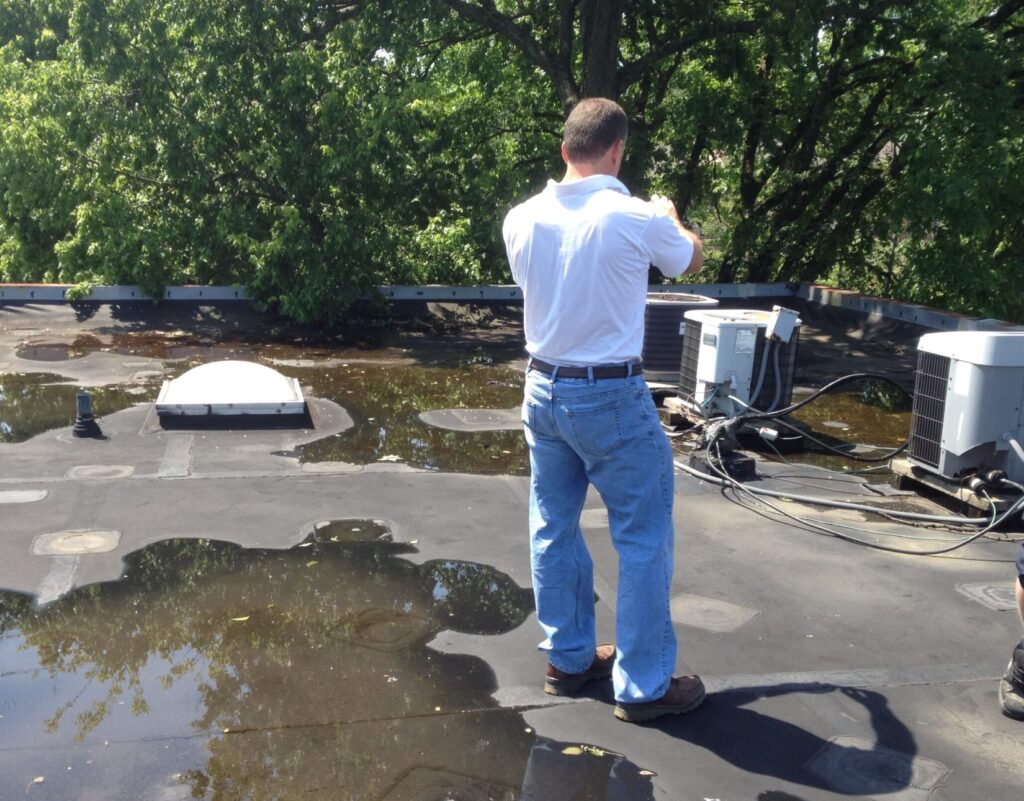
One of the most common misunderstandings is the belief that if 25% of a commercial roof is damaged, the entire roof must automatically be replaced.
In reality, commercial roofing decisions involve much more than a single percentage. The type of roofing system, age of the roof, existing insulation conditions, warranty requirements, and overall performance of the system all influence whether repairs are appropriate or whether replacement becomes the better long-term solution.
In many cases, the percentage itself is only one part of a much larger evaluation.
Why Commercial Roofing Systems Require a Broader Evaluation
Commercial roofing systems are engineered assemblies, not just surface coverings. They are more complex than many people realize. They often include insulation, rooftop equipment, drainage systems, warranties, and energy code requirements.
That’s why commercial roofing conversations should never be reduced to a simple “repair versus replacement” formula without a thorough inspection.
When Commercial Roof Repairs Reveal Larger Problems
In commercial roofing, visible damage does not always tell the full story.
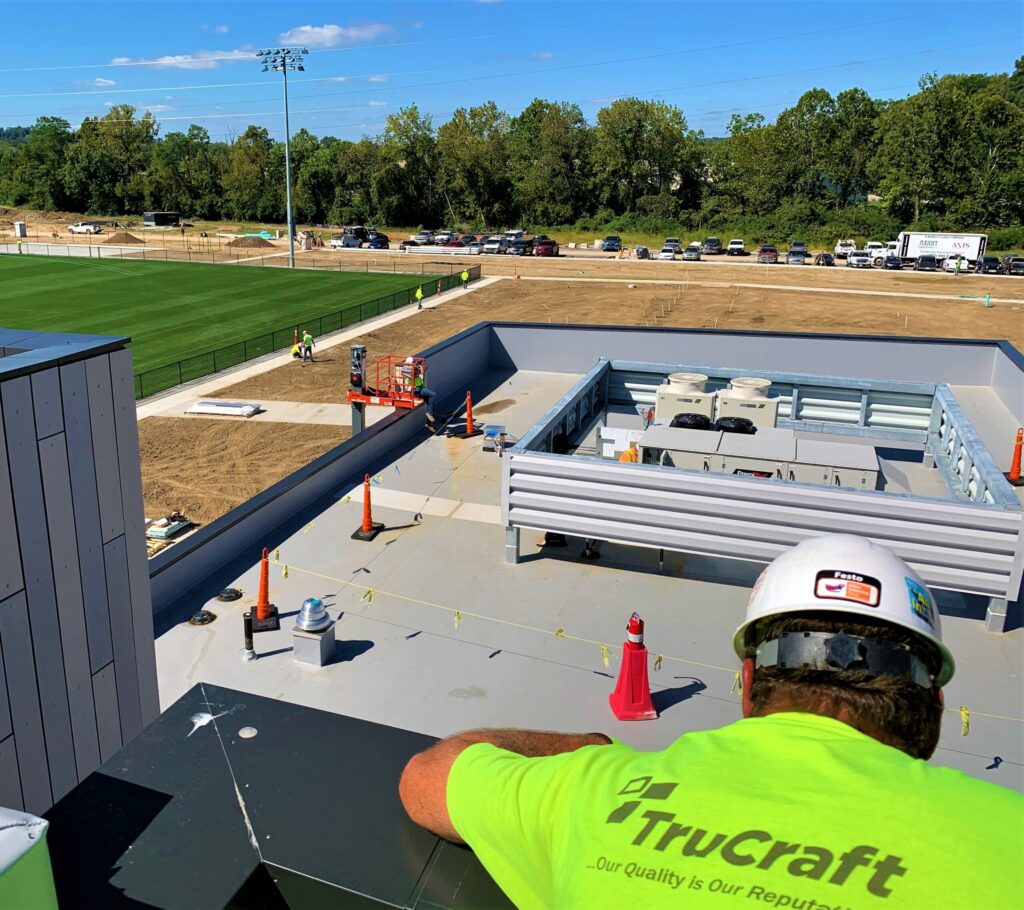
What initially appears to be a localized repair can sometimes reveal trapped moisture beneath the membrane, deteriorated insulation, compromised decking, or larger system failures once sections of the roof are opened.
This is especially common on aging low-slope roofing systems where water intrusion may spread far beyond the area where leaks first become visible inside the building.
Does the 25% Rule Mean a Commercial Roof Must Be Replaced?
Not necessarily.
Another important point that is often overlooked is that not every commercial roof requires complete replacement.
There are situations where targeted repairs, restoration systems, roof coatings, or phased replacement plans can safely extend the life of a roof while helping building owners manage budgets strategically.
At TruCraft, we believe the goal is not simply to recommend the largest possible project. The goal is to help property owners understand the actual condition of their roofing system and make informed long-term decisions.
Sometimes that means replacement. Sometimes it does not.
Insurance and Commercial Roofing Code Requirements
Insurance conversations can create additional confusion because insurance approvals and building code requirements are not always the same thing.
A building owner may receive insurance approval for repairs while still needing to address code-related requirements depending on the local jurisdiction, roof condition, or scope of work involved.
This is one reason why working with an experienced contractor matters. Building owners should work with a team that understands commercial roofing systems, local code considerations, and how to evaluate long-term roofing performance. Choosing the right partner can help avoid unnecessary repairs, overlooked issues, or premature replacement recommendations. Learn more about choosing the right commercial roofing contractor.
What Commercial Property Owners Should Do Before Making Roofing Decisions
If the commercial roofing 25% rule is mentioned during a project discussion, the next step should be a comprehensive roof inspection and code evaluation.
Start with a professional commercial roof inspection. A thorough evaluation helps determine the condition of the entire roofing system, identify underlying issues, and clarify whether repairs, restoration, or replacement make the most sense for the building long term.
Regular inspections and a proactive commercial roof maintenance program can also help identify issues before they become larger repair or replacement projects.
Every commercial roof is different, and decisions should be based on actual roof conditions rather than assumptions or generalized advice online.
Final Thoughts on the 25% Rule in Commercial Roofing
The 25% Rule is often discussed as though it is a universal trigger for full roof replacement, but commercial roofing decisions are rarely that simple.
A proper evaluation considers the condition of the entire roofing system, including moisture intrusion, roof age, code compliance, warranty concerns, operational needs, and long-term building performance.
The most important thing a building owner can do is work with a contractor who approaches the conversation honestly and strategically rather than jumping directly to a one-size-fits-all recommendation.
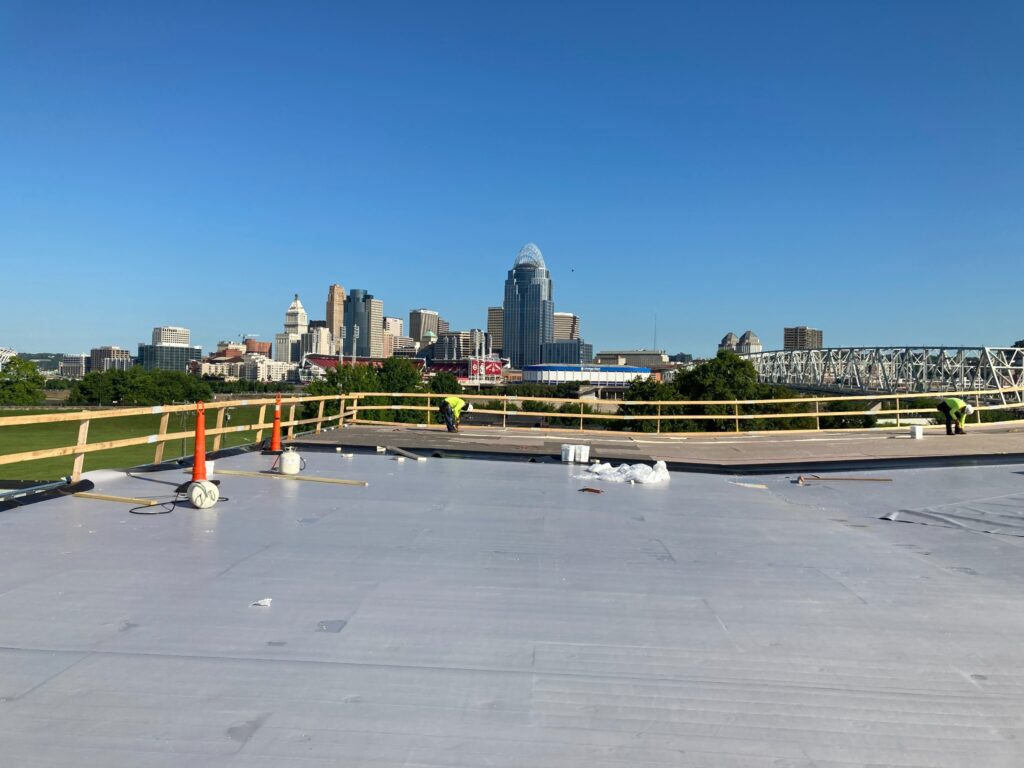
At TruCraft Roofing, we provide commercial roofing services for property owners throughout Cincinnati and the Tri-State region. Our team helps building owners evaluate roofing systems carefully and make informed decisions based on the building’s actual needs — not assumptions.
Frequently Asked Questions About the Commercial Roofing 25% Rule
Does the commercial roofing 25% rule automatically require a full roof replacement?
Not necessarily. The commercial roofing 25% rule is only one factor in determining whether a roof can be repaired or replaced. Local code requirements, roof condition, insulation, warranty considerations, and building-specific factors all play a role in the final decision.
Does the commercial roofing 25% rule apply to every building?
No. Building codes and enforcement can vary by jurisdiction. Requirements may differ depending on the location of the building, the roofing system involved, and the scope of the proposed work.
How do I know if my commercial roof can be repaired instead of replaced?
The best way to determine whether repair is a viable option is through a professional roof inspection. Factors such as roof age, moisture intrusion, insulation condition, and overall system performance should all be evaluated before making a decision.
How often should a commercial roof be inspected?
Most commercial roofs should be professionally inspected at least once or twice per year and after significant weather events. Regular inspections can help identify issues early, extend roof life, and reduce the likelihood of unexpected repairs or premature replacement. Many property owners choose to pair inspections with a preventative maintenance program to help extend roof life and reduce unexpected repair costs.