

Choosing a commercial roofing contractor is one of the most important decisions a building owner or facility manager can make. The contractor you hire can impact the lifespan of your roof, future maintenance costs, warranty coverage, and even day-to-day business operations.
Today, it is easier than ever for a company to create a professional website, purchase advertising, and present itself as an experienced contractor. While online reviews and marketing materials can provide helpful information, they do not always tell the full story.
If you’re evaluating contractors for a roof repair, replacement, restoration, or maintenance project, here are several factors to consider before making your decision.
Verify the History and Reputation of the Commercial Roofing Contractor
One of the first things to evaluate is the contractor’s history and reputation within the industry. How long have they been in business? Do they have experience with projects similar to yours? Are they established in the local market?
While resources such as Google Reviews, the Better Business Bureau, and industry directories can provide valuable insight, they should not be your only source of information. Ask for references, review completed projects, and look for evidence of long-term relationships with customers.
Commercial roofing systems are expected to perform for decades. Working with a contractor that has demonstrated long-term stability can provide confidence that they will be available to support future warranty and service needs.
Evaluate the Commercial Roofing Contractor’s Business Location and Resources
A commercial roofing project requires more than a sales representative and a website. The contractor should have the personnel, equipment, facilities, and operational resources necessary to perform the work they are proposing.
Whenever possible, verify the company’s physical location. A contractor’s office, warehouse, vehicles, and staff can reveal a great deal about its capabilities and commitment to the market it serves.
Contractors with dedicated project managers, service technicians, safety programs, and trained installation crews are often better equipped to handle complex roofing projects and provide ongoing support after the work is completed.
Observe How the Commercial Roofing Contractor Evaluates Your Roof
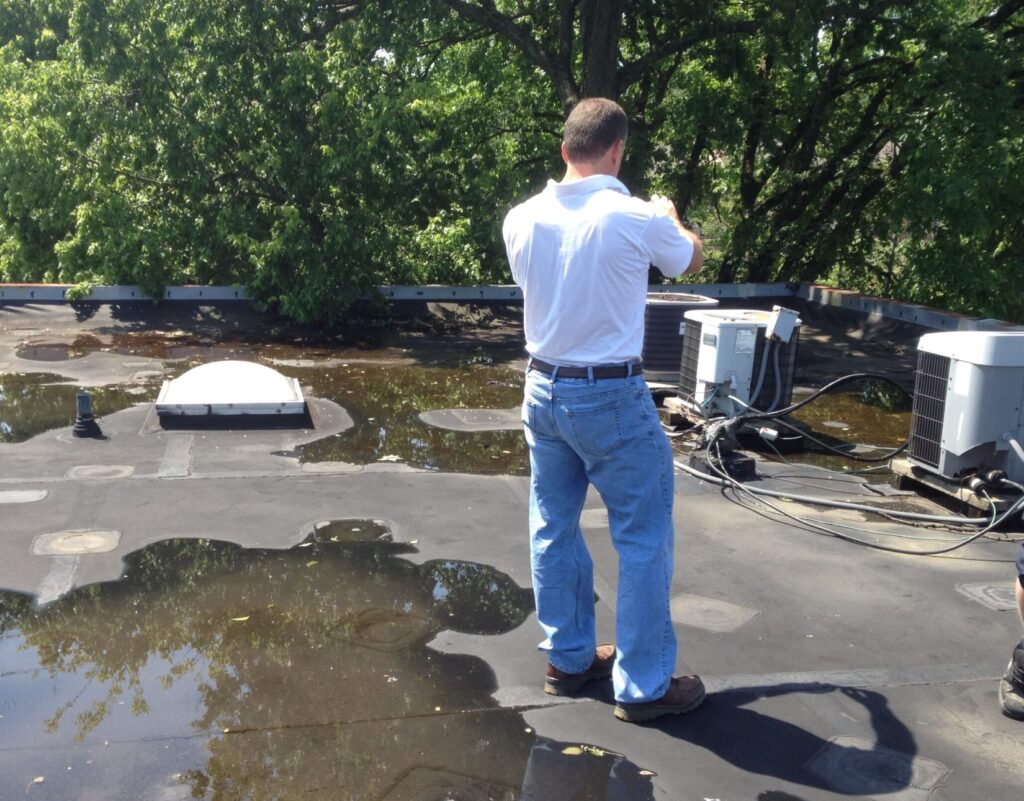
The inspection process often reveals the difference between an experienced commercial roofing contractor and one that simply wants to provide a quick estimate.
A qualified contractor should take the time to thoroughly evaluate your roof, investigate existing conditions, identify potential concerns, and understand your goals for the building. They should ask questions about recurring leaks, previous repairs, building operations, budget considerations, and future plans for the property.
In many cases, there may be multiple solutions available. A quality proposal should clearly explain the recommended scope of work and provide enough information to help you make an informed decision.
A thorough inspection helps identify common commercial roof problems before they develop into larger and more costly issues.
Ask the Right Questions Before Hiring a Commercial Roofing Contractor
Before signing a contract, take the opportunity to ask questions about the company, its employees, and its approach to roofing projects.
Some important questions include:
- How long have you been in business?
- Do you specialize in commercial roofing?
- Will company employees or subcontractors perform the work?
- Who will manage the project once construction begins?
- Do you have a dedicated service department?
- Can you provide references from similar projects?
- What safety procedures do you follow?
- Are you certified by roofing manufacturers?
The answers often provide valuable insight into how the company operates and what you can expect throughout the project.
Choose a Commercial Roofing Contractor with Manufacturer Certifications
Most major roofing manufacturers offer contractor certification programs that require specialized training, quality standards, and ongoing performance requirements.
Manufacturer certifications can be an important indicator that a contractor has experience installing specific roofing systems according to the manufacturer’s specifications.
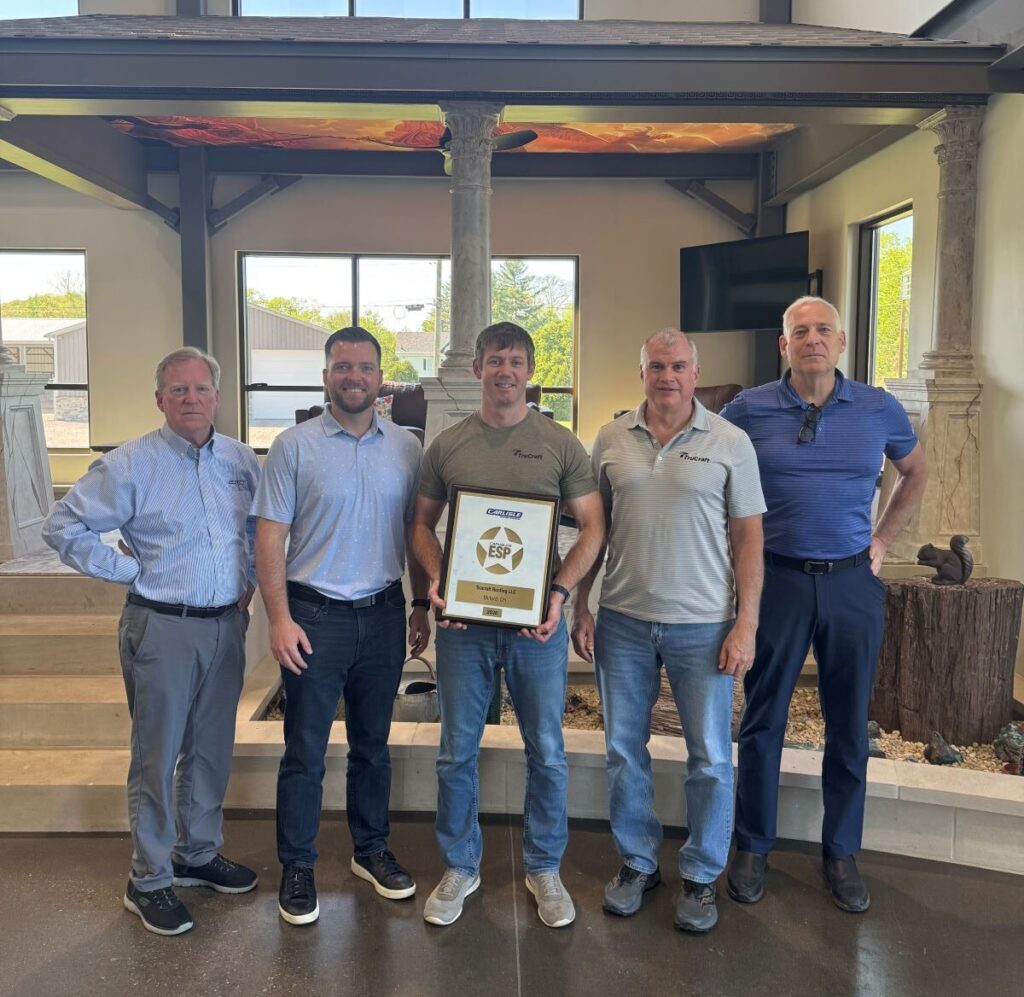
Manufacturer certifications and quality installation practices are critical factors when evaluating a contractor. For example, TruCraft was recently recognized with the Carlisle ESP (Excellence in Single-Ply) Award, an honor given to contractors who consistently demonstrate high-quality installation and workmanship standards.
Certified contractors may also have access to enhanced warranty options that are not available through non-certified installers. If certifications are important to your project, ask the contractor which manufacturers they are authorized to represent and request documentation if needed.
Understand Commercial Roofing Warranties Before You Buy
Roofing warranties can be confusing because several different types of coverage may apply to a project.
A contractor workmanship warranty generally covers installation-related issues, while a manufacturer material warranty covers defects in the roofing products themselves.
Some commercial roofing systems may also qualify for enhanced manufacturer warranties that provide broader protection and long-term coverage. These warranties often require certified contractors, approved materials, and specific installation procedures.
Before signing a contract, make sure you understand exactly what warranty coverage is included and who is responsible for honoring it.
In some situations, determining whether a commercial roof should be repaired or replaced can have a significant impact on long-term costs and building performance.
Compare More Than Price When Choosing a Commercial Roofing Contractor
Price is an important factor, but it should never be the only factor.
Commercial roofing proposals can vary significantly based on the materials being used, insulation levels, attachment methods, warranty coverage, labor quality, project management, and safety requirements.
When comparing proposals, take the time to review what is actually included in the scope of work. The lowest price may not always represent the best value if important components have been excluded.
A thorough “apples-to-apples” comparison will help ensure you understand what you are purchasing and avoid unexpected costs later.
Understanding local building code requirements can also impact roofing decisions. For example, the 25% rule in commercial roofing may affect whether repairs or replacement are required depending on the condition of the existing roof system.
Final Thoughts
Choosing the right commercial roofing contractor requires more than comparing prices or reading online reviews. By evaluating a contractor’s experience, reputation, certifications, resources, inspection process, and warranty offerings, you can make a more informed decision and protect your investment for years to come.
The right contractor should not only provide a quality roofing system but also serve as a long-term partner for inspections, maintenance, repairs, and future roofing needs.
If you’re evaluating options for your building, our team provides comprehensive commercial roofing services, including inspections, repairs, maintenance programs, roof restoration, and full roof replacement throughout the Cincinnati Tri-State area.
Frequent Asked Questions
How do I choose a commercial roofing contractor?
Look for a commercial roofing contractor with a proven history, manufacturer certifications, local references, a physical business location, and experience with projects similar to yours. A quality contractor should also provide a thorough inspection and clearly explain available options.
Why are manufacturer certifications important for commercial roofing contractors?
Manufacturer certifications indicate that a contractor has received specialized training and meets specific installation standards. Certified contractors may also be able to offer enhanced warranty options that are unavailable through non-certified installers.
Should I choose the lowest commercial roofing bid?
Not necessarily. Lower bids may exclude important items such as insulation upgrades, warranty coverage, repair work, or higher-quality materials. Always compare proposals carefully to understand what is included.
What questions should I ask a commercial roofing contractor?
Ask about years in business, project experience, manufacturer certifications, safety practices, warranty options, service capabilities, and whether employees or subcontractors will perform the work.
Why does a commercial roofing contractor's local presence matter?
An established local contractor is more likely to be available for future service, warranty support, inspections, and maintenance. Local contractors also have a stronger understanding of regional weather conditions and building requirements.